
Learn how over dimensional shipping works with this guide about Canadian and American best practices for permits, routing checks, loading rules, and clear handoffs.
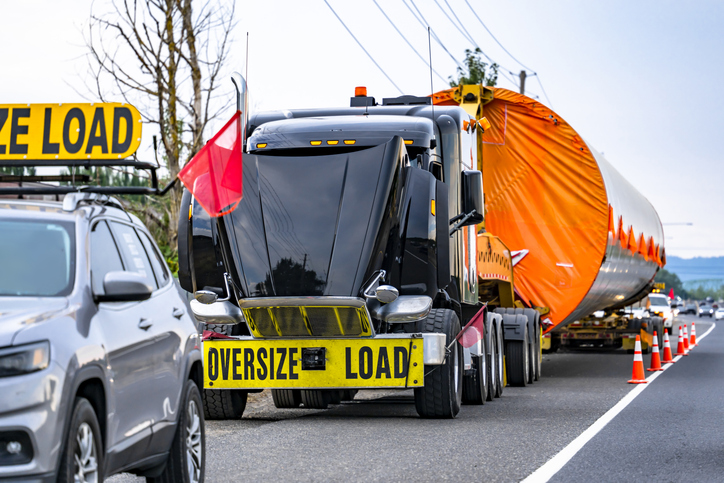
From construction modules to industrial equipment and large fabricated components, these loads keep projects and supply chains moving. Because they exceed standard legal size or weight limits, they require specialised equipment, extra planning, and clear communication across every handoff.
Over dimensional shipments are freight moves that exceed standard legal limits for width, height, length, or weight. Most moves require permit planning, route checks for clearances and restrictions, equipment selection that keeps the load legal, and a securement plan that fits the cargo’s shape and centre of gravity. Good site readiness and documentation reduce delays, damage, and rework.
In the sections below we explore:
- The challenges businesses face when moving over dimensional loads across Canada and the United States
- What over dimensional shipping includes and the freight most commonly transported
- How over dimensional shipping works including planning, permits, routing, equipment, loading, and delivery
- Answers to common questions that businesses often ask
By the end of this guide there will be a clear understanding of what over dimensional shipments require and what a reliable process looks like from pickup to delivery.
1. The challenges businesses face when moving over dimensional loads across Canada and the United States
Over dimensional freight is rarely “just a bigger version” of standard trucking. Once a shipment crosses a legal threshold for width, height, length, or weight, planning requirements change. Permits may be route specific or time specific. Travel windows may be limited to daylight hours or exclude weekends and holidays. Escort requirements can be triggered by dimensions, route complexity, or local rules.
Canada adds complexity because requirements vary by province and route. Some corridors are well suited to oversized loads, while others present clearance limits, bridge constraints, seasonal road restrictions, or construction detours that change the safest path week to week. Municipal road work and temporary closures can create last-minute reroutes that are not feasible for an oversized load.
Cross-border freight introduces another layer. A shipment that is permitted in Ontario may face different thresholds, escort triggers, or travel-hour rules once it enters a US state. Border documentation must also match the physical reality of what is on the trailer. When a move is difficult to reschedule, even small paperwork inconsistencies can create outsized delays.
Pickup and delivery environments also matter more than many teams expect. A standard dock can be forgiving. A tight industrial gate, an active construction site, or a yard with uneven ground may not be. Over dimensional shipments often require cranes, forklifts with specific capacities, spotters, and traffic control to load or offload safely. If site readiness is not confirmed in advance, the truck can arrive to a situation that is physically impossible to execute on schedule. A good guide to over dimensional shipping focuses on the details that prevent surprises: accurate measurements, realistic routing, permit conditions, equipment choice, securement planning, and consistent communication.

2. What over dimensional shipping includes, and the freight most commonly transported
2.1 What over dimensional shipping includes
Over dimensional shipments are freight moves that exceed standard legal limits for one or more of the following:
- Width
- Height
- Length
- Weight
A quick definition helps: a permit is written authorization to move freight that exceeds legal limits, often with conditions such as approved routes, travel hours, signage, lighting, escorts, or speed limits. Permits can be single trip, multi trip, or time based depending on the jurisdiction and the move.
Another term that appears early in planning: a route survey is a clearance and restriction check along the planned path, looking for height limits, bridge ratings, construction zones, narrow turns, and seasonal restrictions. For over dimensional shipments, route feasibility is as important as distance.
2.2 Freight commonly moved as oversized loads
Common examples of freight that often moves as over dimensional shipments include:
- Construction and infrastructure components (steel, bridge parts, forms, precast elements)
- Industrial equipment (presses, CNC machinery, turbines, compressors)
- Energy and utilities components (transformers, skids, long conduit bundles)
- Large fabricated assemblies (modules, tanks, large frames)
- Agricultural and forestry equipment (harvesters, attachments, specialised machinery)
These loads vary widely in shape and handling needs. Some are dense and heavy. Others are long and awkward. Some are top heavy. Many require custom securement. That is why over dimensional shipping is less about one “standard solution” and more about applying a repeatable planning process.
2.3 Why measurements and trailer choice matter so much
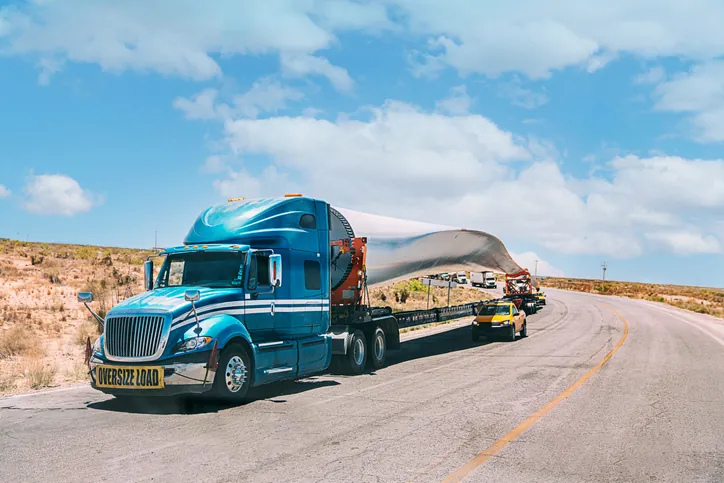
Over dimensional shipments live and die by measurements. The same cargo can be legal or illegal depending on trailer deck height, axle configuration, and how the load sits. A common example is height. A taller deck can push a load over a clearance threshold, changing route options and permit requirements.
A useful definition here: centre of gravity is the point where the load’s mass is balanced. A high or offset centre of gravity can change securement needs and affect how the load behaves on turns or rough roads. This matters for damage prevention and safety planning.
2.4 Compliance is not one rulebook
Canada and the United States both have layered rule sets. Provincial and state thresholds can vary. Municipal restrictions can override preferred routes. Permit conditions can include travel windows and escort requirements that change how a schedule must be built.
This is why many shipping teams treat over dimensional shipping as a project, not a dispatch. The move needs inputs, planning steps, verification, and clear ownership.
2.5 Loading and unloading environments are part of the shipment
Many oversized shipments do not move dock to dock. Delivery might happen at a plant expansion, a jobsite, a yard, or a facility with tight access. Site readiness often determines whether the move is smooth or expensive.
Site readiness includes:
- Access and turning space
- Ground conditions and staging space
- Lift plan and equipment capacity
- Spotters and traffic control
- Timing alignment with supervisors and receiving teams
2.6 Cross-border over dimensional shipments
Cross-border moves require accurate documentation and consistent descriptions of the freight.
This typically includes:
- Bill of lading
- Commercial invoice or cross-border documentation set
- Accurate commodity description and reference numbers
- Weight and dimension details where required
Border teams may also look closely at whether the physical shipment matches the documentation. For over dimensional shipments that are difficult to rebook, the best practice is to reduce ambiguity before departure.
3. How over dimensional shipping works including planning, permits, routing, equipment, loading, and delivery
This section uses a practical framework that supports predictable outcomes on complex moves.
3.1 A practical framework for over dimensional shipments
A repeatable approach can be summarised as:
Assess → Plan → Train → Implement → Verify → Improve
Assess
Start with a consistent load profile that includes measured dimensions, total weight, photos, handling notes, and any known constraints such as site access or delivery window. Include packaging and dunnage in measurements.
Plan
Translate the load profile into a route and permit strategy. Identify clearance risks, escort triggers, travel-hour limits, and equipment needs. Build a schedule around permit lead times, escort availability, and site readiness.
Train
Training that sticks is competency, not attendance. Competency includes the ability to interpret a load profile, understand how trailer choice changes overall height and axle loads, recognise permit conditions, and escalate changes early. For recurring moves, simple templates and photo examples outperform long documents.
Implement
Execute the plan with clean handoffs at pickup, in transit, at the border if applicable, and at delivery. Document securement and confirm that site readiness matches what was planned.
Verify
Use checkpoints before issues appear. Verify measurements and equipment pre-dispatch, verify securement post-load, re-check securement after the first safe stop, and confirm delivery readiness before arrival.
Improve
Capture lessons learned after each move and feed them back into templates and checklists. Improvements should make the next shipment easier, not create extra bureaucracy.
This framework also supports good communication. The more complex the shipment, the more valuable clear status updates become for operations, procurement, and project teams.
Close-variant check for distribution: oversized load moves benefit most when planning steps are standardised and repeatable.
3.2 Due diligence and documentation that prevent delays
Due diligence is about reducing uncertainty. The most useful documentation is simple, visual, and consistent.
Examples of day-to-day “reasonable steps” for oversized shipments include:
- One-page load profile used for every move
- Photos of the cargo from multiple angles before loading
- Written handling notes such as “no straps across this surface”
- Permit inputs recorded clearly (dimensions, weights, trailer type)
- Route notes including known bottlenecks and alternate options
- Site readiness confirmation notes and contacts
For Canada–US lanes, documentation alignment matters. Commodity descriptions, values, and reference numbers should be consistent across the document set. The goal is to reduce the chance that the shipment gets stuck due to avoidable mismatches.
Close-variant check: over dimensional shipping documentation is most effective when it prevents last-minute equipment swaps and permit rework.
3.3 Equipment and trailer options used for over dimensional shipping
Trailer choice depends on the freight and the route. Common equipment categories include:
Flatbed and step deck
Often used for freight that is wide or long but can stay within height limits. Step decks can help manage overall height compared to a standard flatbed.
Double drop or lowboy
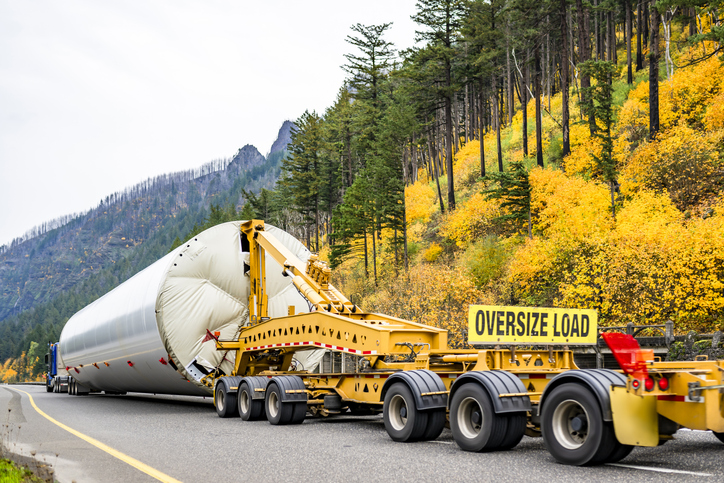
Used when height is a key constraint. A lower deck helps keep the shipment under clearance thresholds, improving route options.
Extendable trailers
Used for long freight that requires extra deck length, often paired with route planning focused on turning geometry and access.
Multi-axle and heavy haul configurations
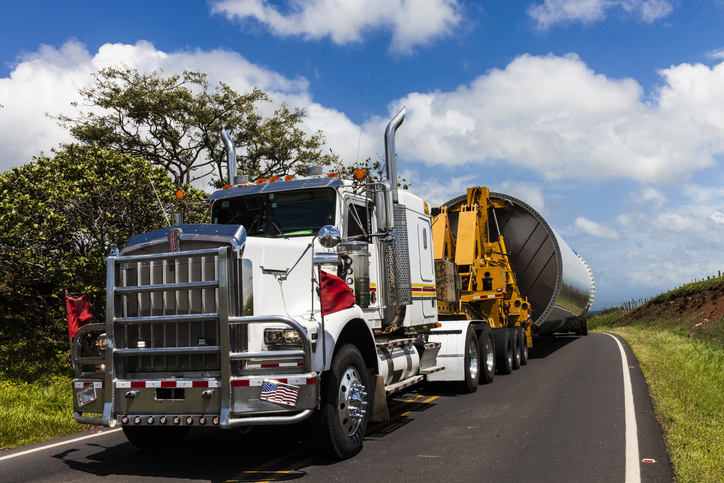
Used when weight and axle distribution are the primary constraints. These moves often require more specialised planning and permit conditions.
A quick definition that helps planning conversations: axle spread is the distance between axles that affects how weight is distributed and what is legal on a route. Weight compliance is not only about total weight. It is about distribution across axles.
3.4 Loading, securement, and damage prevention
Securement is a major risk-control lever. The securement plan should match the load’s shape, centre of gravity, and surface characteristics.
Best practices include:
- Choosing securement hardware that matches the load and conditions
- Using edge protection to prevent strap damage and cargo damage
- Avoiding securement points that can crush or deform the freight
- Documenting securement with photos after loading
- Re-checking securement after the first safe stop in transit
Weather protection also matters. Some freight needs tarping or wrap to prevent water intrusion, surface damage, or contamination. Planning protection steps early reduces on-site improvisation.
3.5 Jobsite realities for over dimensional shipments
Construction and industrial sites introduce variables that can disrupt a schedule quickly.
Common issues include:
- No space to stage or turn
- Lift equipment unavailable or under-capacity
- Ground conditions unsafe for offloading
- Traffic control and spotters not arranged
- Receiving team not aligned with arrival window
A practical approach is to treat site readiness as part of the route survey. Confirm the last mile and the on-site execution plan before dispatch.
3.6 High-risk move planning and contingency controls
Some shipments are high-risk because consequences are high: a plant shutdown part, a project-critical module, or a load with narrow permit windows.
High-risk planning should include:
- Clear hazard list (clearances, route constraints, equipment mismatch, securement risks, site readiness)
- Controls for each hazard (route checks, measurement verification, permit condition summary, securement plan, readiness calls)
- Escalation path if conditions change (weather, closures, access issues)
- Staging options where feasible
If a formal job hazard analysis approach exists internally, applying that structure to the shipment can keep responsibilities clear without adding confusion.
WANT TO LEARN MORE ABOUT OVER DIMENSIONAL SHIPPING?
- Route Surveys for Oversized Loads in Canada and the US
- How to Choose the Right Trailer for Over Dimensional Shipments
- Pilot Cars and Escort Requirements for Oversized Shipments
4. Quick FAQ
Q. What is considered an over dimensional shipment?
A. Over dimensional shipments exceed legal limits for width, height, length, or weight. Permit triggers and rules vary by province, state, and route, so accurate measurements and trailer choice are essential.
Q. Do all oversized loads need permits?
A. Most oversized shipments require permits once they exceed legal thresholds. Permit type and conditions depend on jurisdiction and route and may include travel-hour rules or escort requirements.
Q. When are pilot cars required?
A. Escort needs depend on dimensions, route complexity, and local rules. Some routes require pilot cars only at specific widths or for certain corridors, so permit conditions should be reviewed early.
Q. What causes the most common delays on oversized shipments?
A. Incorrect measurements, equipment mismatch, route constraints discovered late, site readiness gaps, and permit conditions that restrict travel windows are common causes. Cross-border paperwork mismatches can also slow Canada–US moves.Q. How can damage risk be reduced for oversized freight?
A. A securement plan matched to the load’s shape and centre of gravity, edge protection, documented securement checks, and weather protection where needed reduce damage risk significantly.
Other Resources
Need quick reference guides or handy tools for your shipments? Check out these helpful resources:
- Shipping Terms Wiki – Unsure about a freight term or acronym? Our comprehensive glossary explains a range of customs, trucking, and shipping terms.
- Shipping Documents – Download standard bills of lading, packing lists, and other essential forms.
- Shipping Label Template – Ensure proper labeling with our ready-to-use template.
Bookmark these tools to streamline your shipping process.

Support for Over Dimensional Shipments
Over dimensional shipping works best when planning is consistent and communication is clean. A practical next step is to review the dedicated service overview for over dimensional shipments and use it as a baseline for scoping requirements such as equipment class, permits, route checks, and delivery-site readiness expectations.
- See the service details here: over dimensional shipping service page.
- For broader coverage and capacity considerations across lanes, reference the freight carrier network of member companies.
- For shipment scoping and coordination, use the freight contact page for quotes and planning.