
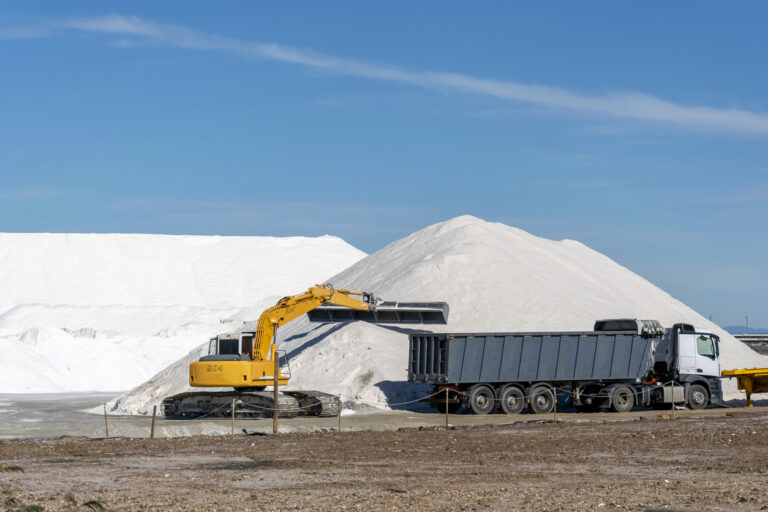
Learn how to choose trailers for dry bulk materials and understand the differences in dump, hopper, live bottom and belt trailers.
Transporting dry bulk materials requires choosing the right trailer for the job. Because these materials are loose and not packaged, the trailer you select affects safety, efficiency and the overall quality of the load. Aggregates, grain, minerals, soil and pellets all behave differently during transport. This means decision makers must look at more than just capacity. They should consider density, flow, unloading needs and site access to ensure smooth delivery.
Below are four important points to help guide your choice.
Understanding how material behaviour affects trailer choice
Different dry bulk materials have different densities and flow characteristics. Heavy materials such as gravel and stone reach weight limits quickly, making dump trailers a common choice. Lighter materials, such as grain or pellets move more easily and work well with hoppers or belt systems. When you understand how your material behaves, you are better prepared to select equipment that keeps the load stable and predictable during transport.
Matching the trailer to the loading and unloading environment
Every trailer handles loading and unloading differently. Dump trailers unload by tipping upward, requiring enough overhead clearance and stable ground. Hopper bottoms use gravity to release material and work well for agricultural products. Live bottom trailers use a conveyor to push material out and are ideal when tipping is unsafe. Belt trailers rely on a moving floor, which is helpful at sites with uneven terrain. Look closely at your loading and unloading environment to determine how the trailer will perform from start to finish.
Considering site access and safety
Some job sites have limited space or uneven ground conditions. In these situations, safety and accessibility should guide your trailer selection. Live bottom and belt trailers are good options for sites with low clearance or soft ground because they do not require the trailer to tip. Dump trailers and hopper trailers need more controlled environments with firm ground and safe traffic flow. Thinking ahead about access, turning space and load positioning supports safe and efficient bulk freight movement.
Choosing the trailer that reduces handling and protects quality
Dry bulk materials often react to moisture, dust or contamination. If your product is sensitive, choose trailers that allow controlled loading and secure tarping. Material quality is protected when it moves through equipment suited to its characteristics. Dump trailers offer fast unloading for rugged materials. Hopper trailers support products that need clean flow without contamination. Belt and live bottom trailers reduce handling and help avoid damage during discharge. Making the right choice ensures the material arrives in good condition.
Dry bulk shipping supports many industries across Canada, from construction and agriculture to mining and plastics manufacturing. When you understand how each trailer works and how your material behaves, you can select equipment that improves reliability and reduces delays. Choosing the right trailer also supports safety and helps your teams coordinate loading and unloading more effectively.
At ShipNorthAmerica, our member companies share a philosophy of personal attention and high standards. We help businesses ship anything anywhere it needs to go. From dry bulk materials to flatbed, oversized or intermodal freight, our network meets every need and exceeds every expectation.
Contact us to request a quote or visit our Member Companies page.
You can also learn more about our bulk shipping services at:
https://shipnorthamerica.com/freight-services/bulk-shipping/